 KIANEWS



Nokia expects to recognize the revenue related to this new patent license agreement starting in January 2024. The agreement is consistent with the assumptions Nokia has disclosed in the commentary with respect to Nokia Technologies long-term outlook in its Financial Report for Q1 issued on April 20, 2023.
Radioactive diamond batteries in cell phones?
09. 07. 2023 Sunday / By: Robert Denes / Generic / Exact time: BST / Print this page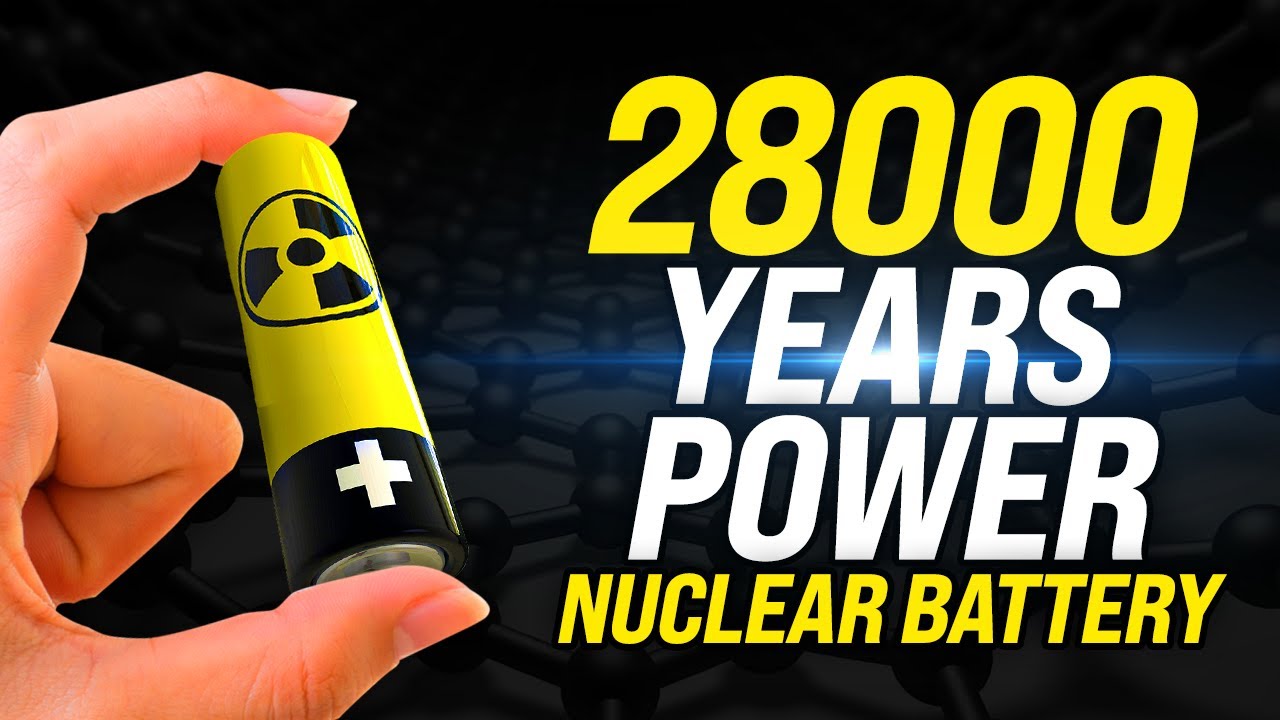
N uclear power is considered a clean energy source as it has zero carbon dioxide emissions; at the same time, it produces huge amounts of dangerous, radioactive waste, which accumulates as more and more reactors are built around the world.
Experts have proposed different solutions to this issue to take better care of the environment and people's health. Since there are not enough safe storage sites for nuclear waste, the focus of these ideas is on recycling the materials.
Radioactive diamond batteries were first developed in 2016 and immediately gained acclaim for promising a new, cost-effective way to recycle nuclear waste. In this context, it is inevitable to consider whether they represent the final solution to these toxic, deadly residues.
What are radioactive diamond batteries?
Radioactive diamond batteries were first developed by a team of physicists and chemists at the University of Bristol's Cabot Institute for Environmental Protection. The invention was presented as a beta-voltaic device, meaning it works by beta decaying nuclear waste.
Beta decay is a type of radioactive decay that occurs when there is an excess of particles in the nucleus, releasing some of them to make the ratio of protons to neutrons more stable. This creates a type of ionizing radiation called beta radiation, which contains many high-speed and high-energy electrons or positrons called beta particles.
Beta decay is a type of radioactive decay that occurs when there is an excess of particles in the nucleus, releasing some of them to make the ratio of protons to neutrons more stable. This creates a type of ionizing radiation called beta radiation, which contains many high-speed and high-energy electrons or positrons called beta particles. Beta particles contain nuclear energy that can be converted into electrical energy through a semiconductor. A typical beta-voltaic cell consists of thin layers of radioactive material sandwiched between semiconductors. As nuclear material decays, it emits beta particles, which release electrons in the semiconductor, creating an electric current.
However, the power density of the radioactive source is lower the further it is from the semiconductor. Furthermore, since beta particles are emitted randomly in all directions, only a small fraction of them enter the semiconductor, and only a small fraction of these are converted into electricity. This means that nuclear cells are much less efficient than other types of batteries. This is where polycrystalline diamond (PCD) comes in. Radioactive diamond batteries are produced using a process called chemical vapor deposition, which is widely used in artificial diamond production. It uses a mixture of hydrogen and methane plasma to grow diamond films at very high temperatures. The researchers modified the CVD process to grow radioactive diamonds using radioactive methane, which contains the radioactive isotope carbon-14 found in irradiated reactor graphite blocks.Diamond is one of the hardest materials known to mankind - even harder than silicon carbide. It can act as both a radioactive source and a semiconductor. Expose it to beta radiation and you get a long-life battery that doesn't need to be recharged. The nuclear waste inside heats it up again and again, allowing it to self-recharge for years.
However, the Bristol team warned that their radioactive diamond batteries would not be suitable for laptops or smartphones as they contain only 1g of carbon-14, meaning they provide very low power - just a few microwatts, less than an average. AA battery. Therefore, their application has so far been limited to small devices that need to remain unattended for long periods of time, such as sensors and pacemakers.
The origins of atomic elements can be traced back to 1913, when the English physicist Henry Moseley discovered that particle radiation could generate electricity. In the 1950s and 1960s, the... aerospace industry was very interested in Moseley's discovery because of its potential to power spacecraft for long-duration missions. RCA Corporation also researched the use of nuclear batteries in radio receivers and hearing aids. But other technologies were needed to develop and maintain the invention. In this regard, the use of synthetic diamonds is considered revolutionary, as it ensures the safety and conductivity of the radioactive battery. By adding nanotechnology, an American company has built a high-performance nano-diamond battery. Based in San Francisco, California, NDB Inc. was founded in 2012 with the goal of creating a cleaner and more environmentally friendly alternative to traditional batteries. The startup introduced a version of diamond-based batteries in 2016, and announced two concept tests in 2020. One company trying to commercialize radioactive diamond batteries. According to the company's calculations, the batteries could last up to 28,000 years, meaning they could reliably power spacecraft during long-duration missions, space stations and satellites. Drones, electric cars and airplanes on Earth should never stop to recharge. Diamond is not only one of the hardest materials, but also one of the most thermally conductive materials in the world, which helps protect the battery from the heat produced by the built-up radioisotopes and converts it into electricity very quickly. The thin PCD layers in these allow the battery to create different shapes and forms. This is why nano-diamond batteries can be multi-purpose and enter different markets, from the aforementioned space applications to consumer electronics. However, the consumer version would not last more than a decade. Nano-diamond batteries are planned to be on the market in 2023. The portability of modern electronic devices, the growing popularity of electric vehicles, and the 21st-century race to take humanity on long-distance journeys to Mars have fueled increasing interest in battery technology research over the past few years. Some types of batteries are better suited for certain applications and not as useful for others. But we can say that the traditional lithium-ion batteries as we know them will not be replaced by radioactive diamond batteries anytime soon. Conventional batteries last a shorter time, but they are also much cheaper to manufacture. At the same time, it is a problem that they don't last that long (their lifespan is about five years), because they also produce a lot of electronic waste, which is not easy to recycle. Radioactive diamond batteries are more convenient because they have a much longer life than conventional batteries. If they can be developed into a universal battery, as proposed by NDB Inc., we could have smartphone batteries that last much longer than the life of the smartphone, and we could easily swap the battery from one phone to another. However, the diamond betavoltaics developed by Arkenlight don't go that far. The company is working on plans to put most of the carbon-14 beta batteries into cells. For high-power discharge, each cell can be supplemented with a small supercapacitor, which can offer excellent fast discharge capability. However, the lifetime of this radioactive material is more than 5000 years. If this radiation were to leak out of the device in gaseous form, it could be a problem. That's where the diamonds come in. C-14 in the diamond formation is a solid substance, so living beings cannot extract and absorb it. The UK Atomic Energy Authority (UKAEA) calculates that 100 pounds (about 45 kg) of carbon-14 can produce millions of long-life diamond-based batteries. These batteries can also reduce the cost of storing nuclear waste. University of Bristol researcher Professor Tom Scott told Nuclear Energy Insider: “By removing Carbon-14 from irradiated graphite directly from the reactor, the remaining waste products will be less radioactive, making them easier to handle and dispose of. The estimated cost of graphite waste disposal is 46,000 pounds ($60,000) per cubic meter for medium-level waste and 3,000 pounds ($4,000) per cubic meter for low-level waste." Don't these features make it one of the best options for the sustainable future we need? We'll have to wait and see if manufacturers find ways to deal with production costs and low power consumption and bring their diamond-based batteries to market in a cost-effective and accessible manner.