 KIANEWS
Pekka Lundmark announces a three-year roll-out plan
17. 12. 2020 Thursday / By: Robert Denes / Industrial / Exact time: BST / Print this page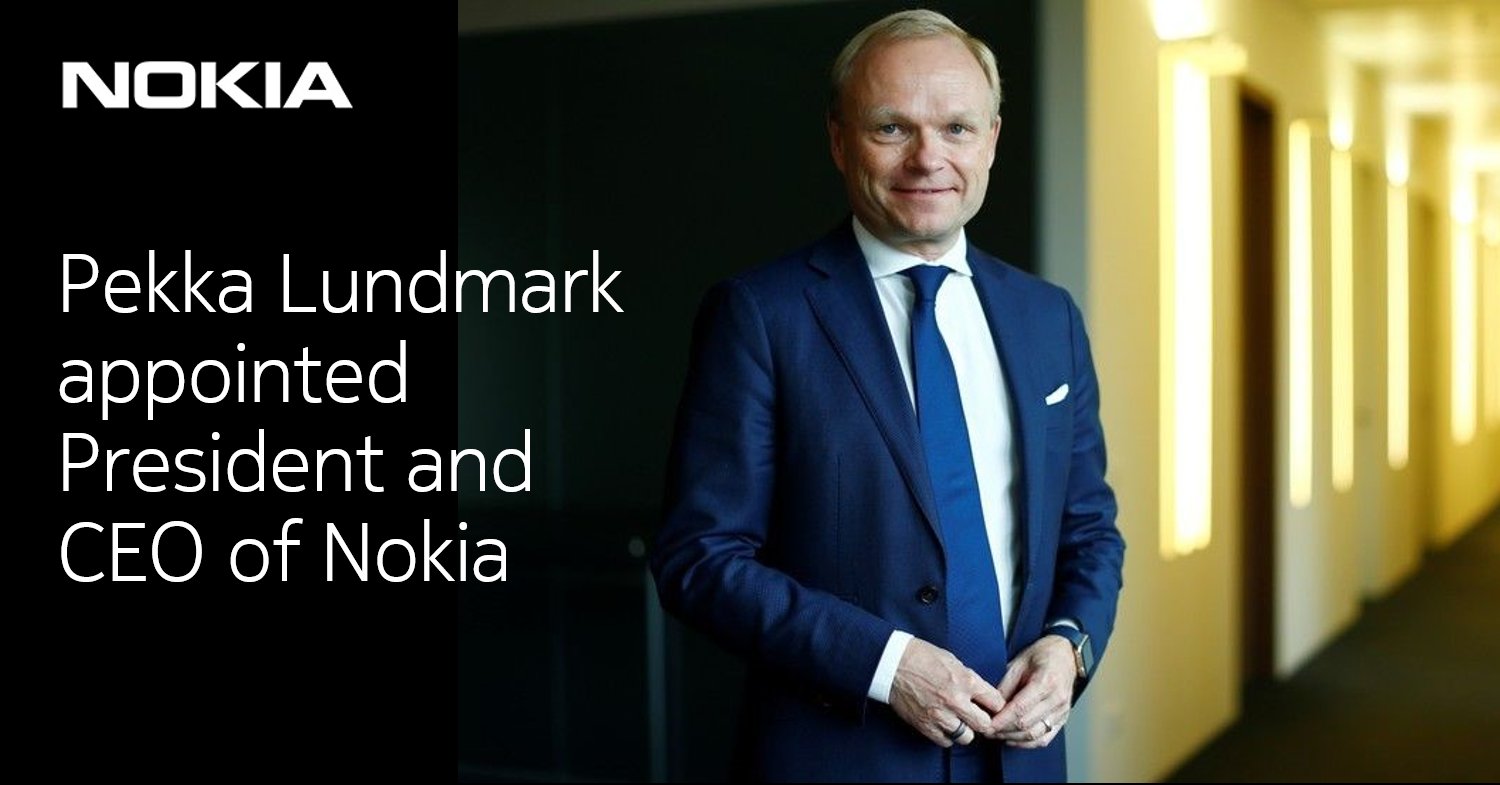
Nokia CEO Pekka Lundmark yesterday shared more details about the company’s roll-out strategy, which is expected to continue until the end of 2023.
The company’s executive team is shrinking from 17 to 11, at least 14,000 employees are being transferred from corporate functions to Nokia’s four new business groups, and the heads of these four divisions have been named.
Significant decisions that could result in the divestment, spin-off or transition of Nokia's business units to another framework have been postponed for the time being, and the company's new corporate structure with four primary business units will officially begin on January 1, 2020.
Nokia does not provide financial guidance for 2021 or any additional year, but is expected to share additional details with investors within a few months. Tommi Uitto will be in charge of Nokia’s largest business, but also the president of the most challenging Mobile Networks, as his years-long plan will continue to replace FPGA with high-cost system-to-chip silicon. Nokia Networks, which includes Nokia Radio Access Network (RAN), microwave radio communications products, and network design, deployment and support services, is not expected to make a profit in 2021, but Lundmark says it is confident that the unit will eventually improve financial performance.17 December 2020
Espoo, Finland – Today Nokia provides an update on its strategy and operating model. On October 29 Nokia announced the first phase of its new strategy, outlining high-level strategic principles alongside a new operating model designed to better position the company for changing markets and align with customer needs. The new model is effective from January 1, 2021. Detailed business group strategies will be provided on Capital Markets Day on March 18, 2021.Providing transparency to Nokia’s four new business groups"We are positioning Nokia to lead in a changing world,” says Pekka Lundmark, President and CEO of Nokia.
“The world faces big problems: environmental issues, resource scarcity, inequality and stalling productivity. Technology will be an essential part of the solution. As a result, we will see an increase in critical networks, which will extend to all corners of society.” Critical networks are advanced networks that run mission-critical services for companies and societies. They are becoming increasingly important and extending to all corners of society. This means that Nokia’s addressable market for critical networks with CSPs, webscales and enterprises is also extending. Customers are using a best-of-breed approach to build these networks, selecting network elements from multiple individual vendors who are able to offer the best performance per total cost of ownership. Nokia is aiming to be the technology leader in the areas it chooses to play in. “We are well positioned to be a trusted partner for critical networks. We are experienced in creating both carrier-grade performance networks and working with the world’s most demanding webscales. We have a strong position in technologies that are important for critical networks, such as open and virtualized radio access networks and we are on course for a 100% cloud-native software portfolio,” says Lundmark. Nokia also sees a market evolution where value in critical networks will gradually shift from monolithic systems towards silicon, software and services; where the importance of cloud-native and open solutions will increase; and where value will be captured through different business models. “We are one of the leading network equipment providers to evolve monolithic core networks to virtualized core networks that are fully cloud-native. One of our focus areas will be to continue building out our capabilities in this area to ensure technology and market leadership. We are well positioned to pivot to new business models as our customers’ needs evolve and require more as-a-service solutions,” says Lundmark. Continuing to strengthen Nokia’s long-term research and global patent portfolio is a key element in securing technology leadership. Nokia’s ambition is to lead in all domains including innovation, products, standardization and patents. “Committing to long-term investment in research and innovation will allow us to anticipate and capitalize on industry changes and position us at the front of the pack when new technology windows open."
Nokia provided its assumptions for its four new business groups and Group Common and Other in 2021 and over the longer term. The company will discuss the addressable markets, competitive positions and strategic focus areas for each business group during its strategy webcast to analysts.
Nokia’s previously provided outlook for 2020 and 2021 remains unchanged. In connection with its Q3 2020 results, Nokia expects comparable* operating margin of 7-10% in 2021. Nokia intends to provide recast comparative segment results for 2020 by mid-March 2021 and more detailed information at its Capital Markets Day on March 18, 2021.Comparable results exclude amortization of acquired intangibles, restructuring and other items affecting comparability. This information provided reflects Nokia’s new operating model, effective January 1, 2021.
Via Link