 KIANEWS



Nokia expects to recognize the revenue related to this new patent license agreement starting in January 2024. The agreement is consistent with the assumptions Nokia has disclosed in the commentary with respect to Nokia Technologies long-term outlook in its Financial Report for Q1 issued on April 20, 2023.
Nokia's old camera feature in the Google Pixel 8
08. 10. 2023 Sunday / By: Robert Denes / Generic / Exact time: BST / Print this page
The Pixel 8 and Pixel 8 Pro were announced at Google's event in New York on October 4 and are now available for pre-order. The infamously leaked Pixel 8 and 8 Pro feature a few new AI-driven imaging features, one of which is the ability to take multiple photos of a group, then select the best faces from each to create a no-blink or no-one looking at the camera etc.
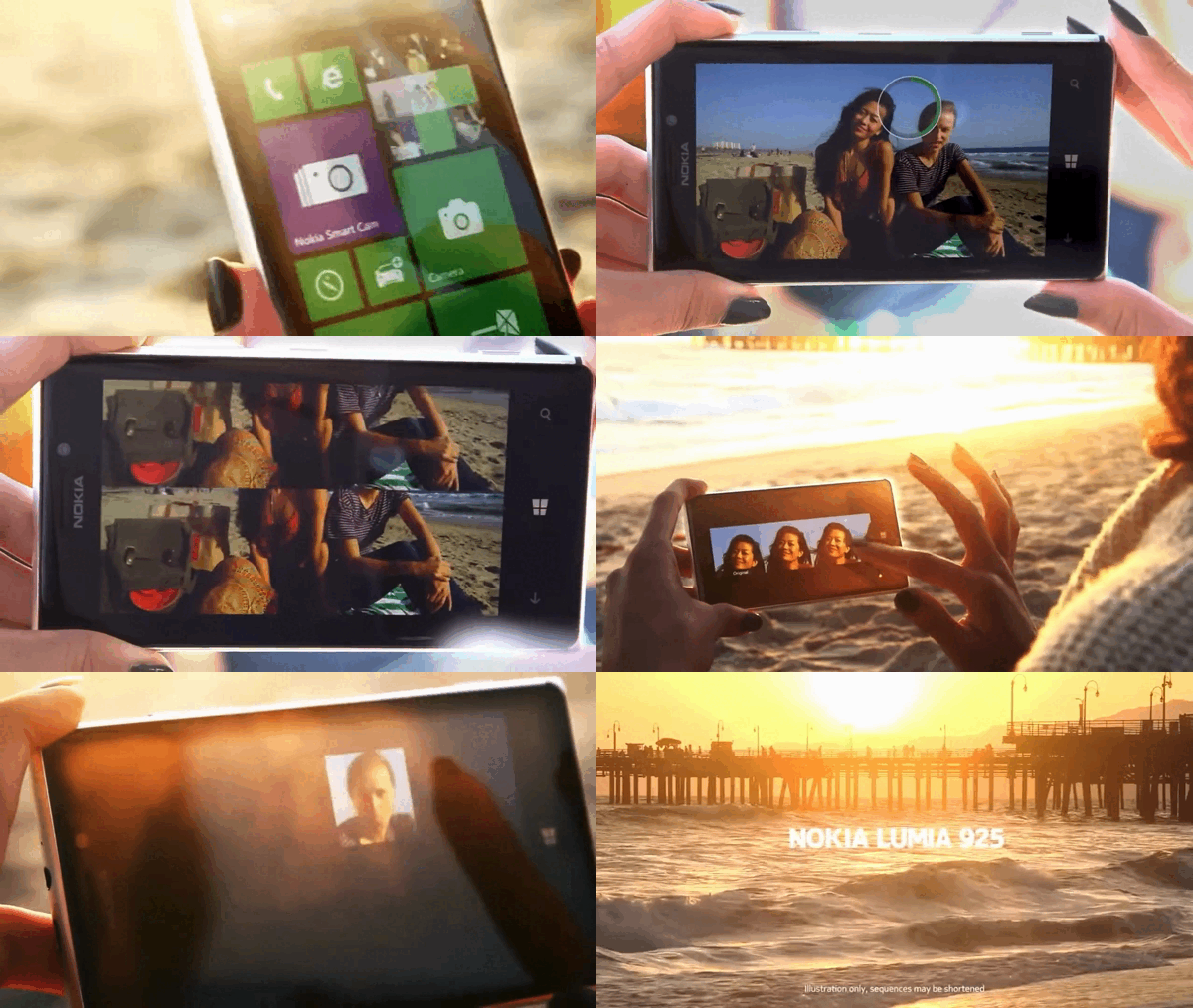
Back in 2012, Nokia released the Smart Shoot app, which took multiple frames and allowed the user to remove unwanted moving objects or... modify people's faces from another frame. With the release of the Lumia 925, Smart Shoot has been renamed Smart Camera and has even more features. Updates to the Pixel this year include a bunch of new manual “Pro” controls for those who want to tweak capture details in more specific ways, as well as improvements to skin tone accuracy and a new “Best Take” feature that lets you replace the individual faces in a group photo, so for example you can make sure everyone is looking at the camera or smiling, even if you don't have a single frame where it's true for everyone at the same time. This looks like a really neat feature, but I wasn't able to properly test it in the demo environment, so you'll have to wait for the full review to find out more details about how well it works. Magic Eraser, which lets you automatically remove elements from a photo, worked great in my brief testing, though that's been true of Pixel phones for a while.

For pre-orders, the Pixel 8 starts at $699 and the Pixel 8 Pro starts at $999. But hey, you're paying for a Google Tensor processor, a 6.2-inch OLED screen with a 120Hz refresh rate, a 50MP main camera with great software, and seven years of software updates, including Android OS updates, security updates, and regular feature drops. . This new camera offers some niche imaging solutions with AI. One such imaging feature is the ability to take multiple images of a group of people and then select the best faces from each to enhance the photo. You can actually remove all blinking faces, people who are out of focus on the camera and looking around, etc.
This year, the Pixel 8 comes with a 50-megapixel wide-angle main camera that performs better in low light, with a 24mm equivalent when talking about the focal length of a classic film camera. It has an f/1.68 maximum aperture, an 82-degree field of view, and a 1/1.31-inch sensor. The main camera also has a 2x “Optical Quality” mode, which basically only crops the center of the frame to mimic a 2x optical lens. The Pro also features the same main camera, complete with Google's Super Res Zoom digital computational tele mode, which can zoom up to 8x.
Besides the telephoto, which is on the Pro and not the standard 8, the biggest difference between the two camera systems is that the Pro's ultra-wide has improved significantly over the non-Pro this year. The 8 has the same 12MP f/2.2 ultra-wide resolution as last year's models, but the 8 Pro gets a 48MP Quad PD sensor with an f/195 maximum aperture and improved autofocus performance. Both smartphones get a new Macro Focus mode, but the better ultra-wide angle should help the Pixel 8 Pro in particular.
The 5x optical telephoto is the other big differentiator for the 8 Pro, and this camera also upgrades the 48MP sensor with a brighter f/2.8 aperture. Includes Super Res zoom up to 30x. Aside from the cameras, the 8 Pro also has a better autofocus system than the Pixel 8, with multi-zone laser detection as opposed to the 8's single zone.
The Pixel 8 Pro gets new professional controls, including manual exposure detail tuning, and with a future update Google will add additional computational video processing features like HDR+ and Night Sight for video, which will be processed partly on the device and partly by Google in the cloud on your servers, as this is a fairly large processing load that must be handled strictly locally. Speaking of video, it records up to 4K with 24, 30 and 60 fps options, slow motion at up to 240 fps, astrophotography Timelapse, cinematic pan and blur options, up to 7x digital zoom 8 and 20 -with close digital zoom. the 8 Pro and more. Also new this year is the company's "Audio Magic Eraser," which it claims can remove background noise from recorded clips.
Via Link