 KIANEWS
Nokia has chosen to lead the European 6G hive-all initiative
08. 12. 2020 Tuesday / By: Robert Denes / Industrial / Exact time: BST / Print this page
Hexa-X illustrates the 6G as a network of networks, connecting everything with a large dose of AI, and Nokia has taken responsibility.
The European Commission’s flagship initiative on 6G research now seems to be one of the projects in which the public sector is kicking some cash into the bank to encourage a lot of companies and scientific institutions to collaborate.
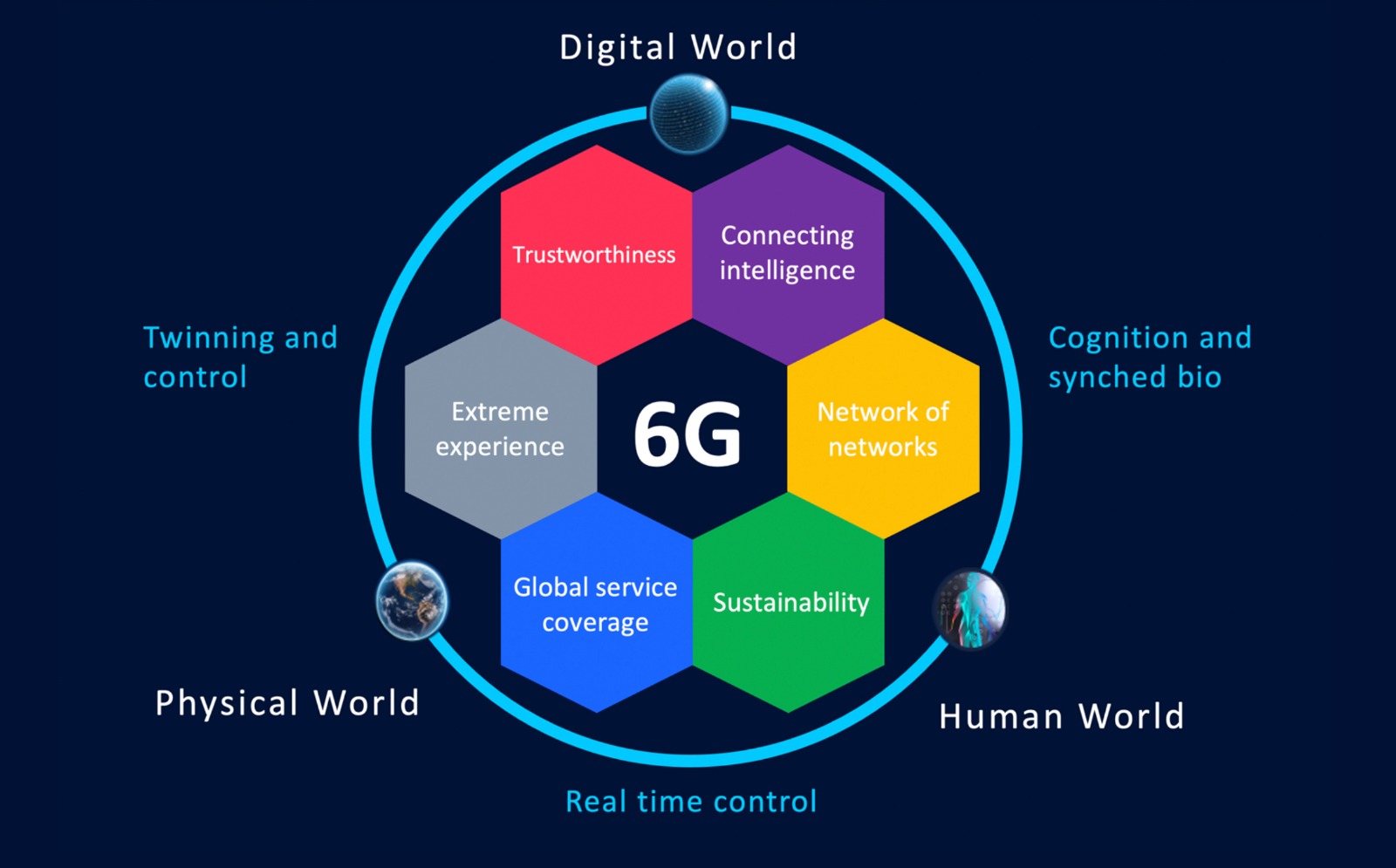
Aside from the fact that 6G usually makes you think a little bit, Hexa-X has some specific ideas about what it should be about. They talk about “defining a new architecture for a smart fabric,” the desire to “connect the human, physical, and digital worlds with the materials that enable 6G technology,” and “ultimately create a single network. All of this sounds like science fiction, which is fine, but it also raises deep questions about whether we want to connect everything this way.
Peter Vetter, Head of Access and Devices Research, Nokia Bell Labs, said: “Even though there is still a lot of innovation in 5G with the release of new standards, we are already exploring 6G in our research lab. In the 6G era we will see applications that will not only connect humans with machines but also connect humans with the digital world. Such a secure and private connection can be used for preventive healthcare or even to create a 6G network with a sixth sense that intuitively understands our intentions, making our interactions with the physical world more effective and anticipating our needs, thereby improving our productivity.”
A 6G network with a sixth sense that intuitively understands our intentions? Are you laughing There are already a number of studies on the ethics of automation and artificial intelligence, and any new steps in this direction need to be examined very carefully. As ever, the technology can be very beneficial, but if you connect AGI to a network, it’s not paranoid to note the possibility of losing control.
Here are the six research challenges that the project will focus on:
Let’s hope they spend a nice long time on that last one, eh? Hexa-X kicks off at the start of 2021 and is budgeted to last 2.5 years, at the end of which it will presumably present its bright ideas to the world.
Via Link