 KIANEWS


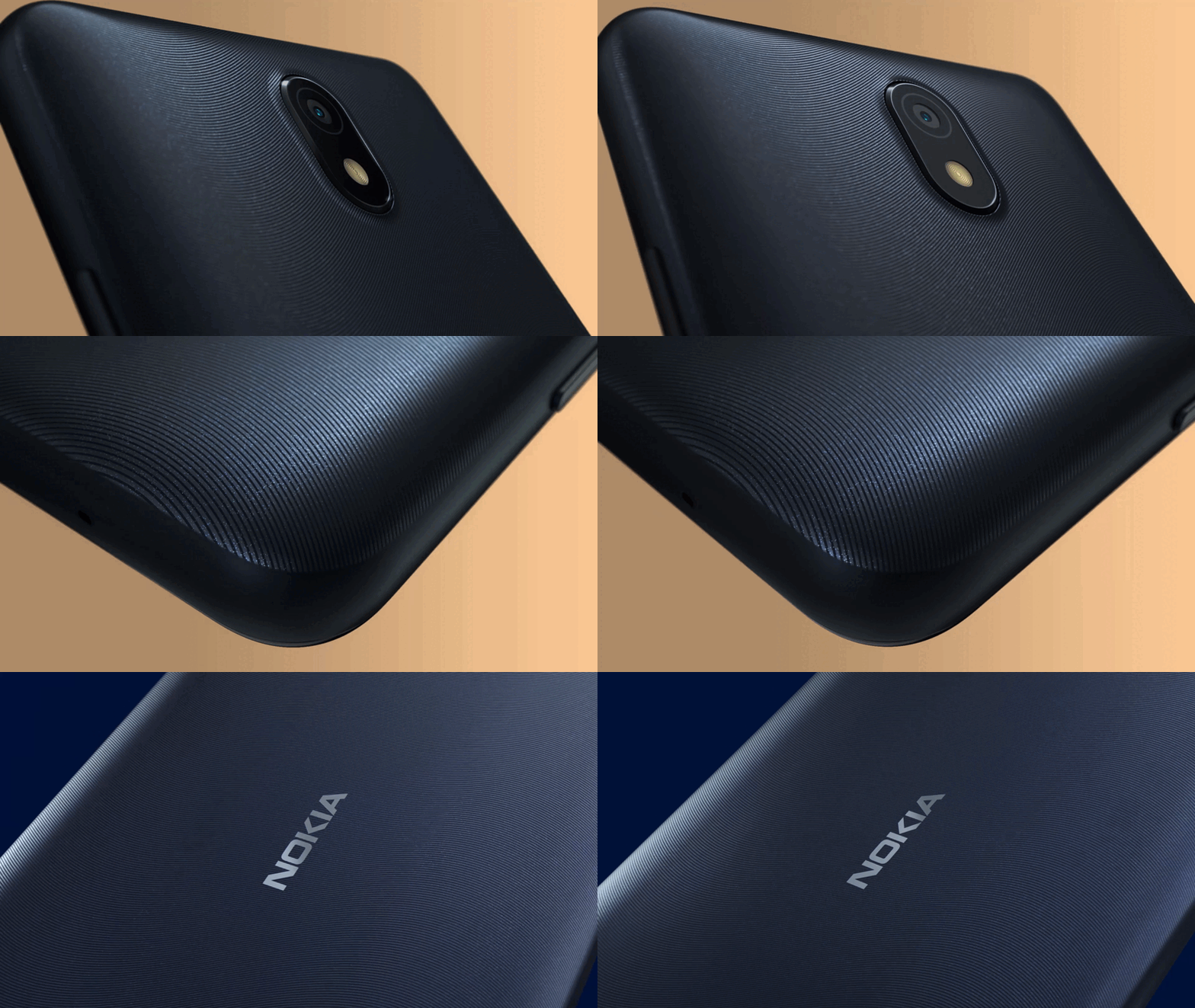

Finnish company HMD Global has launched a new HMD Fuse smartphone aimed specifically at children. According to the company, it is the world's first smartphone that prevents children from filming, broadcasting or viewing nude and sexually explicit content, even while streaming.
Nokia CEO Justin Hotard faces investor pressure after 27% share plunge
24. 08. 2025 Sunday / By: Robert Denes / Business / Exact time: BST / Print this page
N okia shares have fallen sharply since Justin Hotard took over as CEO in April, as investors worry about the company’s competitiveness and financial performance in the stagnant telecoms sector.
Few global brands have changed shape as often and dramatically as Nokia, the revived Doctor Who of the business world that would now be unrecognizable to its 19th-century founders. Most consumers still associate it with the candy-cane-sized phones that helped kickstart the mobile revolution, but Nokia had a much less glamorous start as a pulp mill whose initial products included toilet paper. Today, it’s all about networks, building out the connectivity infrastructure of data centres, cell towers and fixed broadband lines.
In its latest form, Nokia has had a tumultuous few months under new boss Justin Hotard. Hotard, who joined from Intel where he led the data center and artificial intelligence (AI) business, has overseen a 27% drop in Nokia’s share price since replacing previous CEO Pekka Lundmark in April. The decline has eroded much of Nokia’s gains over the past 15 months and means the company is worth about the same nominal value as it was about five years ago. Swedish rival Ericsson has fared even worse over the same period, but Nokia’s performance since the leadership change has been particularly poor.
Shareholder discontent has grown despite Nokia looking technologically stronger than it did in 2020. The core, transport and wireline networking assets it acquired with its 2016 acquisition of Alcatel-Lucent have always been highly valued, and Nokia has bolstered that business with its recent acquisition of optical networking specialist Infinera. Nokia’s mobile networking business has recovered from pre-5G mishaps when it ran into software problems and was beset by concerns over its overreliance on the flawed Intel.
But that’s not reflected in Nokia’s recent underwhelming financial performance. In the second quarter, its first under Hotard’s full control, comparable net profit fell 28% year-on-year to just 236 million euros ($275 million), despite revenue rising 2% (though 1% at constant currency) to around 4.47 billion euros ($5.21 billion). Worryingly, Nokia’s comparable operating margin fell 2.9 percentage points to 6.6%. Without Nokia Technologies’ lucrative intellectual property business, which contributed 255 million euros ($297 million) to operating profit, Nokia would have barely posted a profit.
Some factors are clearly beyond Hotard’s control...and have weighed on other manufacturers. Annual spending on radio access network (RAN) products has fallen by $10 billion in two years to about $35 billion by 2024, according to analyst firm Omdia, a sister company to Light Reading. While the market outside of China is expected to grow slightly this year, no one sees a future recovery, and it’s highly likely that 6G won’t drive as much network spending as previous standards. Hotard also can’t do much to sway Donald Trump’s thinking on tariffs. He blamed these and a weaker US dollar for the revision to Nokia’s financial forecast for this year. At the midpoint of the forecast range, the company now expects operating profit of 1.85 billion euros ($2.16 billion) for 2025, about 14% less than the original figure. Geopolitics, meanwhile, have sidelined it within China without forcing other countries to replace Huawei, China’s largest network equipment supplier, and create opportunities for Nokia – although Hotard is hopeful that change will come in Europe. Hotard also inherited a big loss in mobile market share in North America. By 2023, AT&T’s RAN was two-thirds Ericsson and one-third Nokia. But in December of the same year, the US telecoms company announced a surprise decision to phase out Nokia, and will become almost entirely dependent on Ericsson. This was not done out of dissatisfaction with Nokia, the carrier executives later insisted, but to provide AT&T with a single platform that could eventually house products from multiple vendors. AT&T is popularly seen as a necessary step toward a multi-vendor "open RAN".The move was widely ridiculed, including by other senior telecom executives who prefer to remain anonymous. For Nokia, however, the consequences have been dire. A few years after Verizon’s similar move, which switched from Nokia to Samsung for 5G, AT&T’s eviction of the Finnish supplier left only T-Mobile as a major US mobile customer. In 2020, the mobile network business was by far Nokia’s largest unit, with revenue of €10.4 billion ($12.1 billion), or about 48% of total sales. Last year, the unit’s revenue fell to €7.7 billion ($9 billion), or 40% of Nokia’s total. Worse, Nokia’s mobile business’s operating profit has been decimated. In 2022, after a 5G product revival, it posted an operating profit of €462 million ($538 million) and a healthy margin of 9.5% in the first half. It fell to a loss of €75 million ($87 million) in the same part of 2025 — and a negative margin of 2.2%, Nokia said in a report. The decline supports the view that equipment makers are heavily dependent on the United States for their profits. Unfortunately, Nokia was unable to offset this loss as much as investors had hoped, in its network infrastructure unit, which houses Nokia’s wireline, Internet Protocol and optical assets (including Infinera). On a purely organic basis, the group’s revenue grew by a decent but unsurprising 8% year-on-year in the latest second quarter to €1.9 billion ($2.2 billion), driven largely by appetite for wired broadband products. But the reason for the Infinera acquisition was related to the expected spending by AI data center companies on optical networking products. Sales at the unit rose by just 6%. At Internet Protocol One, also seen as a beneficiary of the AI investment, they rose by just 3%. During Nokia’s routine earnings report, analysts were unsurprisingly curious about why the company hadn’t done better in the optical space since it acquired Infinera. Hotard's response was essentially that Nokia is still lagging behind optical rivals like Ciena and has work to do on product development in areas like 800G pluggable systems. The same seems to apply to the Internet Protocol business, with Hotard saying "there's still a lot to do in that area" and promising an update at Nokia's capital markets day later this year. But the capital spending is already eating into the network infrastructure operating margin, which shrank to 5.7% in the latest second quarter from 6.4% a year earlier. The small cloud and network services unit, while competitive against rivals, accounts for just 12% of Nokia's total revenue and 3% of its operating profit. Without other big growth drivers, Hotard may be forced to make cuts. Under Lundmark, Nokia’s headcount has shrunk from around 92,000 in 2020 to 75,600 by the end of 2024, although the Infinera acquisition since then has added around 3,400 people (based on last year’s figures). The shrinkage has come despite Lundmark’s efforts to turn the separate business groups into standalone, self-operating entities. When he took over in August 2020, he scoffed at the previous strategy of presenting Nokia’s entire “end-to-end” portfolio of core, wireline and mobile networking products to customers. “It’s interesting to have ‘end-to-end’ discussions, but that’s not how customers buy,” Lundmark said. But a flatter and less siloed structure seems to be returning at least under Hotard. Critical functions, including finance, human resources, communications and marketing, and legal, will be moved from business groups to a central location where they can serve different parts. Hotard denied that any job cuts would be necessary. He also denied that he would return Nokia to the days before Lundmark. Yet his strategy is similar to that of Rajeev Suri, Lundmark’s predecessor. “We have to recognize that we have to emerge as a company that works across the portfolio,” Hotard told reporters in a phone call last month. Lundmark has sought to shield Nokia’s research and development spending from its austerity program. But its annual budget has barely increased since its acquisition of Alcatel-Lucent in 2016. That year, Nokia invested about 4.2 billion euros ($4.9 billion) in all research and development. It will spend roughly 4.3 billion euros ($5 billion) in 2024. Over the same period, Ericsson, which is increasingly mobile-focused, will increase its annual spending from 31.6 billion Swedish kronor ($3.3 billion) to 53.5 billion Swedish kronor (to $5.6 billion). It clearly outperforms Nokia on RAN. And Hotard now has much less fat to trim. It will be much harder to make cuts that don’t hurt R&D. Nokia’s fortunes could change quickly if Hotard is right about what he calls an “AI supercycle” that is driving investment not just in the data center but in a range of connectivity products. On that basis, he has defended Nokia’s ownership of mobile network equipment, and a withdrawal from the market would worry customers who are already struggling with a shortage of suppliers. Outside North America, Nokia has maintained its foothold and even advanced in some countries while smaller rivals have floundered. If it can restore profitability, then judging by Omdia’s outlook, the worst is over. But more vocal shareholders are calling for bolder action, upset by years of financial disappointments and what they see as questionable corporate governance that is partly designed to hide the rot. One shareholder has complained for years that Nokia has been reporting two sets of figures, “comparable” and “IFRS” (for International Financial Reporting Standards). Its combined operating profit for 2017-2024 was about 14.2 billion euros ($16.5 billion) on a comparable basis, but only 3.5 billion euros ($4.1 billion) under IFRS, according to calculations by Light Reading. The huge delta includes billions of euros in charges for amortization of intangible assets, goodwill impairment, restructuring and “certain other items,” according to Nokia’s latest annual report. "Comparable" is effectively a metric designed to flatter Nokia's results and present them in the rosiest possible light. Nokia is certainly not the only company to boast such positively adjusted numbers, and it does at least publish these IFRS numbers. But it does illustrate how much worse it looks when they are not adjusted. That €10.7 billion ($12.5 billion) difference, three-quarters of the total comparable figure, is huge. What's more, C-level executive compensation is based on Nokia's comparable operating results, not its IFRS-based performance. It also explains why Nokia's share buybacks have depleted its balance sheet in the absence of any real extra profit, says the same shareholder who grumbles about comparables. Financial reports clearly show that net cash has fallen from around €7.78 billion ($9.08 billion) at the start of 2016 to around €4.85 billion ($5.66 billion) nine years later. During that period, Nokia spent around €2.9 billion ($3.4 billion) on share buybacks and has not paid a separate dividend since paying €600 million ($700 million) on the sale of mapping business HERE Technologies in 2016, the disgruntled shareholder writes. The author blames the company’s stagnation and stagnation on the vagaries of the Finnish system in choosing board members. That makes it difficult to implement changes, especially when no single investor controls more than 10% of the voting rights (Nokia’s largest Finnish shareholder is state-backed Solidium, which owns about 6% of the business). “26% of Nokia’s shares are owned by Finnish investors,” the shareholder letter posted online says. “These investors are generally passive, respectful and emotionally attached to Nokia as a symbol of national pride.” The radical moves, supported by this person and supported by others, include spinning off the network infrastructure business and various core assets into a more dynamic, growth-ready entity. It would get rid of the sluggish mobile unit, with its huge R&D needs, and could even relocate it to the United States, where it would likely attract American institutional investors and a more generous valuation. American ambition would follow what critics see as Scandinavian timidity. If all this sounds very American and anti-European, some Finns and Swedes are equally dismissive of their own backyards. Last year, Börje Ekholm, Hotard's Swedish colleague at Ericsson, mocked Europe as a museum and raised the possibility of moving his organization to the United States, where it currently generates about 45% of its revenue. Lundmark was even more scathing in January, saying that Europe has "one foot in the morgue." A move by Ericsson or Nokia to the United States would be a huge loss for a Europe already starved of big tech players. For many European stakeholders, the would be impossible, and would undoubtedly encounter business and political obstacles. But a few years ago, it wasn’t even a topic of conversation. Nokia has shown repeatedly throughout its history that it is willing to start over. If nothing else, Nokia now has an American boss for the first time in its 160-year history. After his own transatlantic move went in the opposite direction, Hotard may have had the opportunity to sample aspects of the local culture, including the sauna, which seems to be as integral to Finland as the pub is to Britain. As always, Finns will be stepping out of their wooden sweatboxes this winter to plunge into icy pools. But for Hotard, the temperatures are unlikely to drop.