 KIANEWS


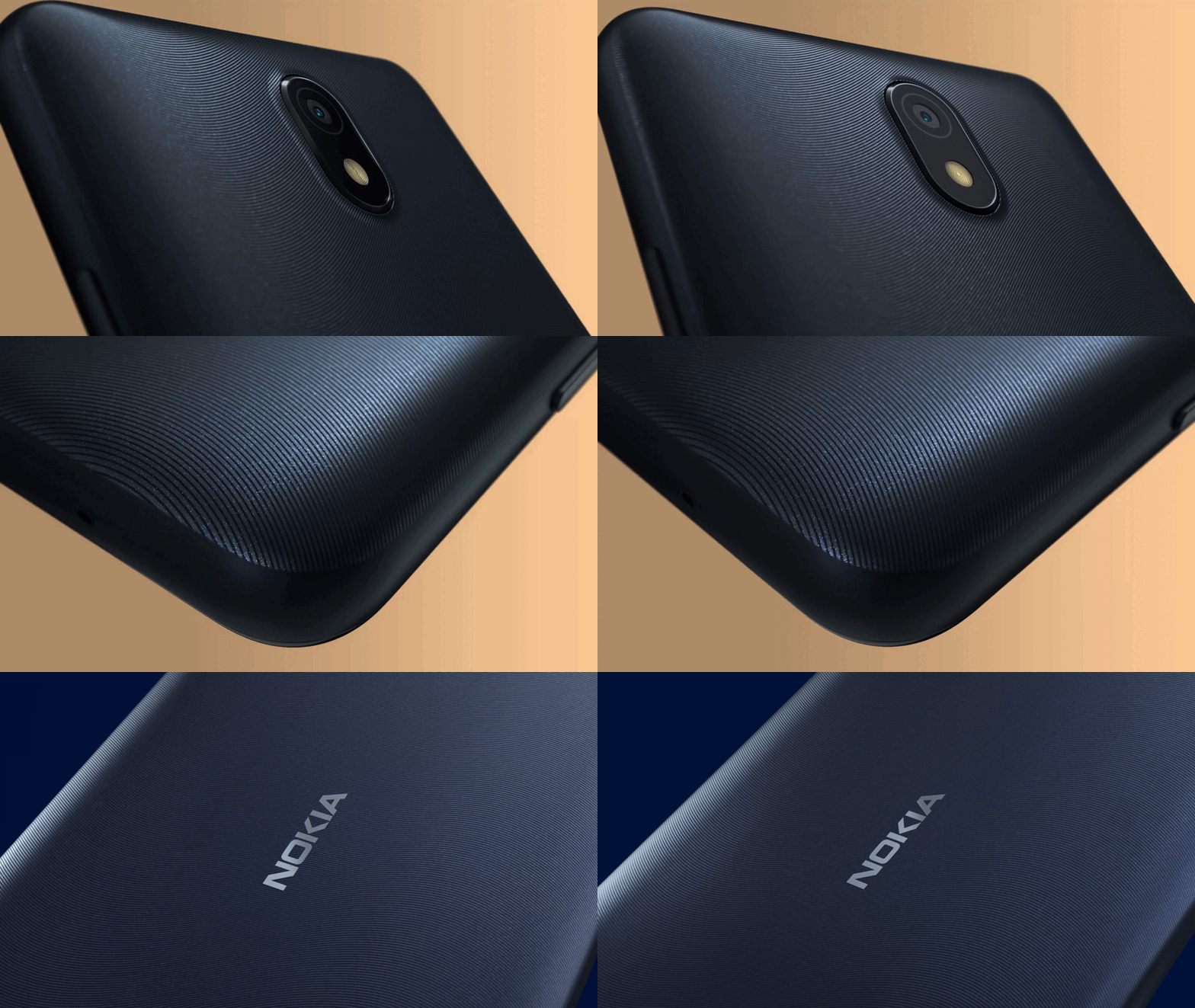

Finnish company HMD Global has launched a new HMD Fuse smartphone aimed specifically at children. According to the company, it is the world's first smartphone that prevents children from filming, broadcasting or viewing nude and sexually explicit content, even while streaming.
Huawei overtakes Nokia outside China
03. 09. 2025 Wednesday / By: Robert Denes / Business / Exact time: BST / Print this page
O mdia’s latest update on the radio access network (RAN) market shows that Huawei has overtaken Nokia to become the second-largest RAN vendor outside China in the second quarter of 2025, with Ericsson continuing to lead the global market.
If a copy of Omdia’s latest update on the radio access network (RAN) market could have been sent back in time to members of Donald Trump’s first presidential administration, they would have been shocked. Among other things, the analyst firm’s research shows that Huawei has overtaken Nokia, which made it the number two RAN vendor based on sales outside China in the most recent second quarter. Only Ericsson was bigger.
This was not what people like Mike Pompeo, the former US Secretary of State, and Keith Krach, the author of the anti-China “clean networks” policy, expected years after Huawei was brought down by a mix of US sanctions and government bans. Far from being fatally weakened, Huawei now looks almost as big and powerful as ever. Its sales last year were the second highest in its history and only 4% lower than in 2020, before the sanctions took effect. In three of the five global regions Omdia surveyed – Asia and Oceania, the Middle East and Africa, and Latin America and the Caribbean – Huawei was the leading RAN vendor. It was still third in Europe, but only missed the top three in North America.
The data shows that the government policy that was integral to the last Trump administration has partly failed. The United States wanted not only to keep American technology out of Huawei’s hands, but also to rid other countries of Huawei’s networking products, especially if they were U.S. allies. While the intelligence-sharing “Five Eyes” nations have now all imposed strict restrictions on Chinese manufacturers, many other countries—including some of Europe’s largest economies—have not. Spain’s Telefónica remains a major Huawei customer in Brazil and Germany, despite telling Krac in 2020 that it would soon have “clean networks” in those markets. Deutsche Telekom and Vodafone, two other European telecom giants, also remain major users of Huawei.
"Ericsson and Nokia, meanwhile, have noted that Europe is struggling to shake off the Huawei habit, warning investors of "aggressive" competition from Chinese manufacturers in some regions. "A few years ago we were all talking about high-risk suppliers in Europe, and I think that's not an option as it looks now," said Börje Ekholm, Ericsson's chief executive."
The push to replace Huawei with Scandinavian manufacturers has not gone as far as hoped. In fact, Ekholm warned analysts a year ago of "increased competition from Chinese manufacturers in Europe and Latin America" and said there was a risk of losing contracts. "I'm sure we'll lose some, but we're doing it because it's good for the company's overall gross margin. Don't expect us to be the most aggressive in the market."
But there is little sign that European telecoms are switching from a Scandinavian vendor to Huawei, or that Ericsson and Nokia are losing significant market share to their Chinese rivals. Nokia’s RAN market share outside China was little changed between the first and second quarters, says Remy Pascal, senior analyst at Omdia (it doesn’t release quarterly figures, but Nokia had 17.6% of the RAN market including China last year). Huawei appears to have overtaken it because of gains at the expense of other vendors and a larger revenue contribution from Huawei-friendly emerging markets in the second quarter. Seasonality and the timing of revenue recognition were also factors, Pascal says.
Still, operators have been reluctant to dump Huawei for a number of reasons. Whatever the allegations against the company, tech leaders continue to value the quality of its products. He pioneered the development of 5G equipment for time-division duplex (TDD) technology, where uplink and downlink communications occupy the same frequency channel, as well as massive MIMO, an antenna-rich system for increasing signal strength. Earl Lum, EJL Wireless Research founder says it beat Ericsson and Nokia to commercialization of gallium nitride-based power amplifiers, an effective alternative to silicon.
The sanctions appear not to have disrupted the technology as much as analysts had expected. While it has been cut off from foundries capable of producing the most advanced silicon, it has managed to get good enough 7-nanometer chips for its latest smartphones, spurring a resurgence in that market. Networking products remain less dependent on access to cutting-edge chips, and sales in the sector appear to have been unaffected outside of markets where restrictions are in place.
Via Link