 KIANEWS


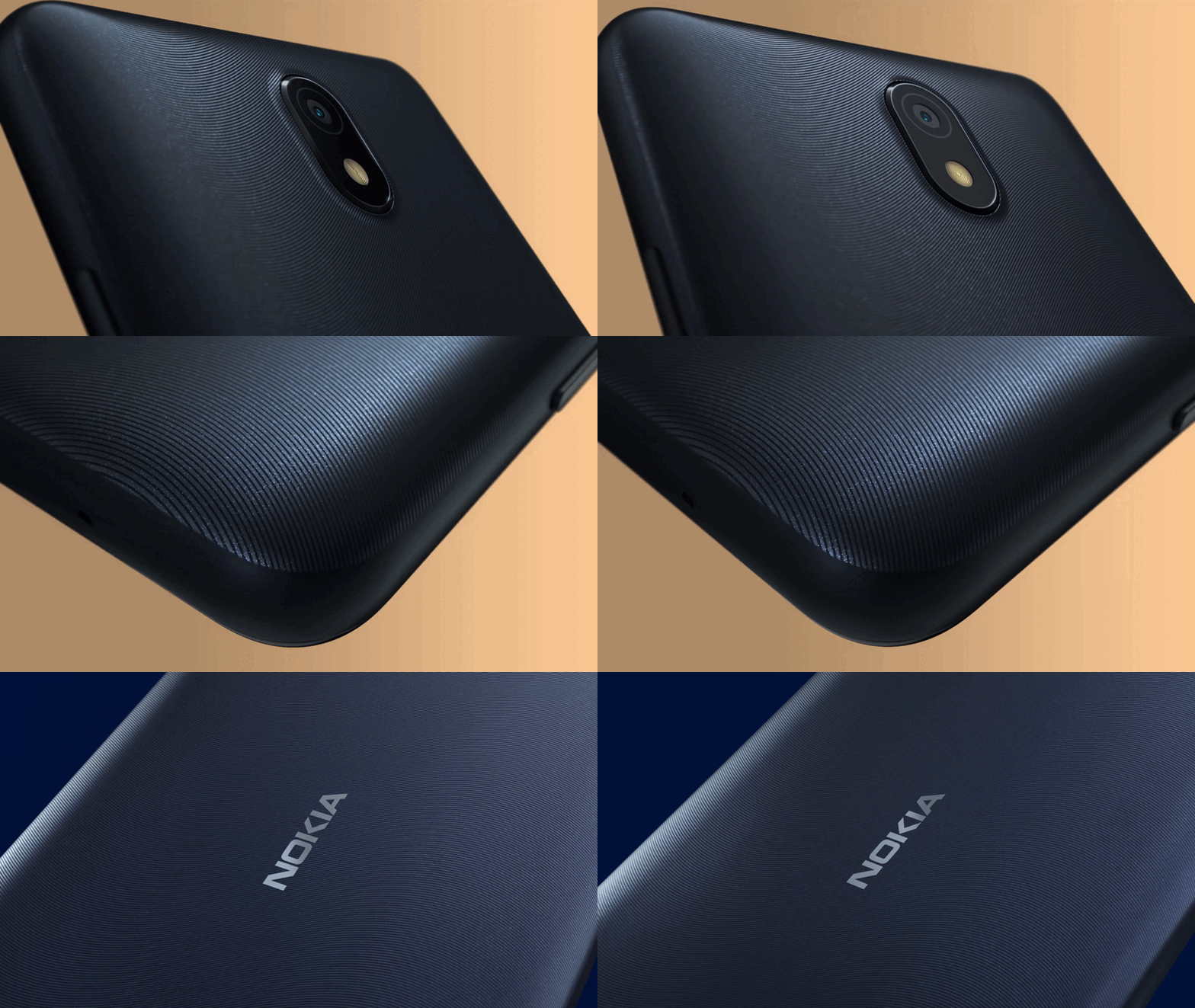

Finnish company HMD Global has launched a new HMD Fuse smartphone aimed specifically at children. According to the company, it is the world's first smartphone that prevents children from filming, broadcasting or viewing nude and sexually explicit content, even while streaming.
China Has Reportedly Developed the World’s First “All-Frequency” Chip
31. 08. 2025 Sunday / By: Robert Denes / Industrial / Exact time: BST / Print this page
The left hand holds a 5G phone, while the right hand holds a 6G display. In fact, we don’t expect to see 6G adoption in the United States until 2030. While that sounds like a long way off, it’s only five years away! The planning and meetings needed to define standards for the next generation of wireless connections have begun. Organizations like the International Telecommunication Union (ITU-R) and the 3rd Generation Partnership Project (3GPP) have already begun working on 6G. The latter is developing the technical standards for 6G, while the former is managing the framework and vision for “IMT-2030,” the official name for 6G.
China has reportedly developed the world’s first ‘all-frequency’ chip, which is expected to debut with the launch of 6G devices. The chip would deliver mobile internet speeds faster than 100 Gbps across the entire consumer wireless spectrum. According to the journal Nature, this would include frequency bands used in remote areas and those used in urban areas. At this data rate, a smartphone user could download a 50GB HD 8K movie in seconds.
Currently, different devices run on different frequencies. Some smartphones run on mid-band 3 GHz signals, compared to the high-band (also known as mmWave) 30 GHz signals used by satellite communications. Future uses of 6G for things like holographic surgery could require 6G signals traveling in the 100 GHz band. Currently, nine separate radio systems would be needed to cover the entire wireless spectrum from 0.5 GHz to 115 GHz. The new component, developed in China, supports these frequencies in a miniature chip.
"A single chip replaces what previously required multiple dedicated devices, achieving true multi-purpose programmability and dynamic frequency tuning. It provides an unprecedented balance between size, power consumption, and performance." Shu Haowen, author of the paper at Peking University
The component seamlessly switches across the spectrum and supports communications running on mmWave and terahertz. So let's pause for a moment and recap what this chip can do. Instead of requiring different chips for different frequencies, this single chip will work with low-frequency signals at 6 GHz, high-band mmWave frequencies, and even higher-band terahertz frequencies.
By seamlessly switching between frequencies, users can get a strong signal in any environment. For example, a device powered by this chip can go from using low-band in the countryside to operating on mmWave frequencies in the city. Now, we can say that today’s phones allow you to switch between low-band and mid-band mmWave frequencies, and that’s true.
But while a smartphone has a single modem chip to process data, the radio frequency (RF) part of the system actually consists of transceivers, power amplifiers, and antenna modules for each frequency range (low-band, mid-band, and mmWave). The breakthrough, discovered in China, allows a small, miniature component to operate across the entire width of the wireless spectrum, from 0.5 GHz to 115 GHz. This could lead to the development of smaller, more versatile, and more power-efficient mobile devices.
"We urgently need to tackle the challenges of 6G development. As the demand for connected devices increases rapidly, next-generation networks need to leverage the strengths of different frequency bands. High-frequency bands such as millimeter wave and terahertz offer extremely high bandwidth and ultra-low latency, making them suitable for applications such as virtual reality and surgical procedures." Wang Xingjun, a professor at Peking University
Chip is about 100 times faster It delivered data rates faster than peak consumer 5G in the United States. The chip’s functional part measures 11 mm x 1.7 mm (0.4 x 0.07 inches), and communication quality was stable and smooth across the entire wireless spectrum. Frequency tuning at 6 GHz, or the time it takes to switch from one frequency to another, was faster than 180 microseconds. That’s hundreds of times faster than the blink of an eye.
Single-channel data rates were faster than 100 Gbps. Compare that to the average rural mobile download data rate in the United States of 20 Mbps. Peak download speeds for 5G users in the United States are just north of 1 Gbps. That means the new chip could deliver download data rates nearly 100 times faster than what some smartphone users in the United States are currently experiencing. The chip also has a feature that allows it to find a "clear channel" if there is a situation where a particular frequency is blocked.
The team working on the chip's next step is to develop plug-and-play intelligent communication modules that would be the size of a USB drive and embedded in smartphones, base stations, drones and other devices. The chip could also lead to the creation of wireless networks controlled by artificial intelligence.
Via Link